
- calendar_today August 21, 2025
.
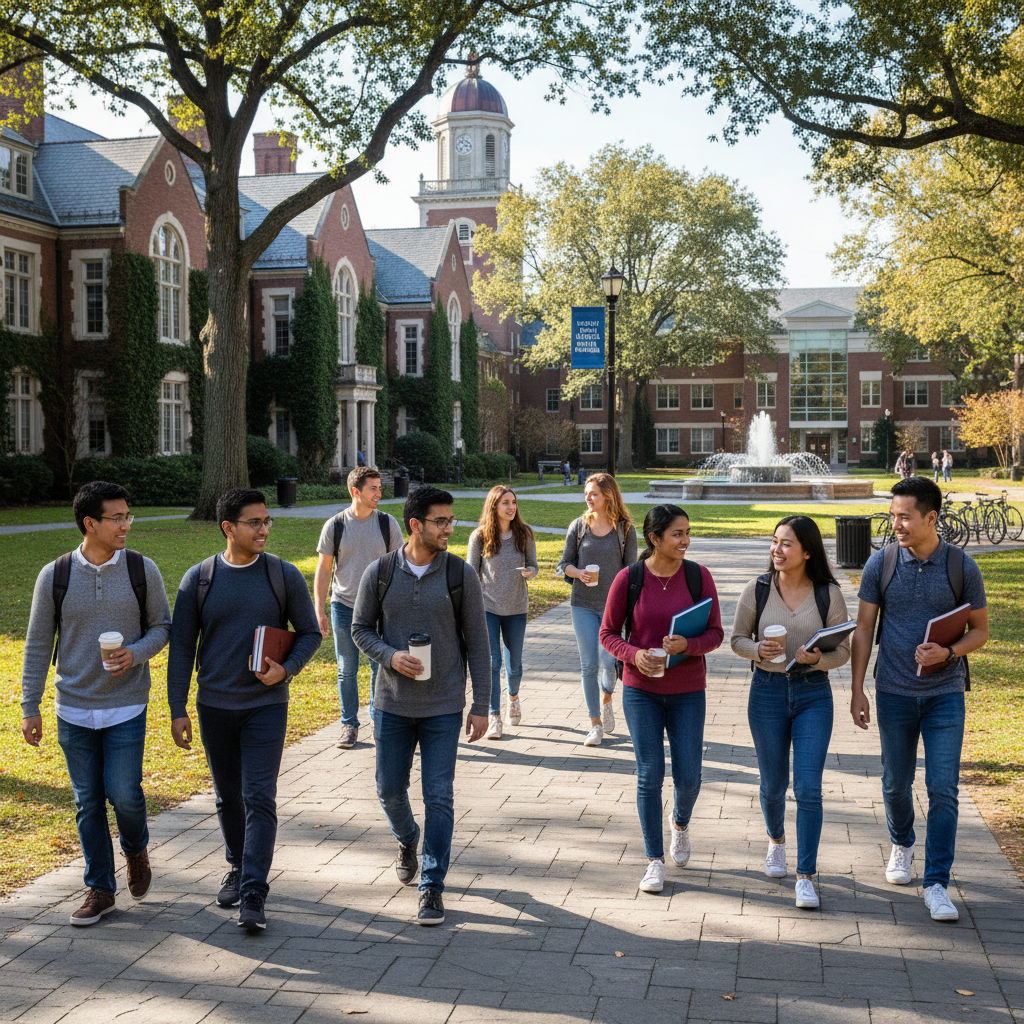
Former President Donald Trump said on Monday that the U.S. would not bar Chinese students from attending American colleges, despite a months-long standoff with Beijing over tariffs and economic competition.
“We’re going to allow their students to come in. It’s very important, 600,000 students,” Trump told reporters on the White House lawn. “We’re going to get along with China.”
His comments suggest a thawing in U.S.-China relations after months of increasingly harsh rhetoric and economic measures. Washington and Beijing have levied multibillion-dollar tariffs on each other’s goods, and Trump has repeatedly hinted at additional penalties in recent weeks, including a 200 percent tariff on Chinese-made magnets last week.
While negotiators have agreed to pause on new tariffs since an accord in Geneva earlier this year, the economic competition and potential for future escalation have alarmed investors and businesses on both sides.
“We’re going to be opening up education in a big way to China. 600,000 students,” Trump added. “We want them to be students at our great universities. It’s very important for our universities. The educational system.”
China would not need to compete economically if they are “smart” and did not build up a “monopoly” on certain products, Trump added.
“I hear so many stories that we’re not going to allow their students to come in,” Trump told reporters on Monday. “We’re going to allow their students to come in. It’s very important, 600,000 students. It’s very important. But we’re going to get along with China.”
There are currently about 270,000 Chinese students at U.S. colleges, according to government statistics, and Trump’s pledge would more than double that number. The additional students would bring a substantial cash infusion to U.S. schools, many of which have complained about revenue shortfalls during the pandemic.
Revoking Visas From China
The statement represents a reversal of a hardline stance Trump’s own administration had signaled in May, when Secretary of State Marco Rubio said the administration planned to “aggressively revoke” visas for Chinese students. In the same speech, Rubio singled out Chinese students working for the Chinese Communist Party or in “research and development” on sensitive or strategic technologies.
Universities were incensed by Rubio’s comments, warning that they would lead to a brain drain and revenue shortfalls in an already struggling system. Trump’s rhetoric, however, appeared to shift in June, when he told reporters he had “always been in favor” of allowing students from China into the U.S.
Monday’s comments appear to double down on that shift, suggesting a pathway for students despite a standoff with Beijing. In remarks following Trump’s interview with The Wall Street Journal, Trump appeared to leave open the possibility of a meeting with Chinese President Xi Jinping.
“Trump said he would ‘love’ to see Chinese President Xi Jinping ‘before the end of the year,’” a Reuters reporter wrote in a tweet. “‘I would like to meet him this year.’ He added, ‘I’m open to meeting with President Xi of China. It’s very important. We’re taking in a lot of money from China because of the tariffs and the different things.”
Trump added, “We have a relationship right now that is good, but it’s not great. But economically, it’s a much better relationship than it was when Biden took over. But they just took him to the cleaners.”
The balancing act Trump is attempting to strike would represent a distinct shift in his administration’s relationship with China. By floating severe tariffs and other measures even as he offers a new path for students, Trump has put in place a strategy of combining hardline economic restrictions with points of collaboration that could benefit U.S. institutions.