
- calendar_today August 9, 2025
Kentucky may be famous for bourbon and bluegrass, but in 2025, it’s also becoming a focal point of America’s shifting trade landscape. As U.S.–China tensions rise, Kentucky’s manufacturing base, agricultural exports, and energy logistics face significant upheaval.
However, rather than watching its economy stall, the state is adjusting its sails—investing in relocalized production, farming diversification, and logistics modernization. The result? A uniquely balanced approach that could serve as a blueprint for other mid-sized U.S. states.
How U.S.–China Tensions Are Impacting Kentucky
Like other central states, Kentucky has been caught in the economic crossfire of the 2025 U.S.–China trade war. Tariff hikes and retaliatory moves from Beijing are hitting some of Kentucky’s most vital sectors.
Trade War Fallout Highlights:
- 25% drop in Chinese demand for Kentucky’s signature soybean and corn exports
(Source: USDA Midwest Trade Bulletin, Q2 2025) - Increased cost of imported manufacturing inputs, particularly electronics, specialty metals, and machine parts sourced from Asia
(Source: Kentucky Chamber of Commerce Trade Report, April 2025) - Auto parts production delays in Georgetown, where Toyota’s flagship U.S. manufacturing plant faces rare earth material shortages
(Source: Reuters Auto Manufacturing Insight, 2025)
Strategic Adjustments Across Key Sectors
Manufacturing: From Global Dependency to Domestic Efficiency
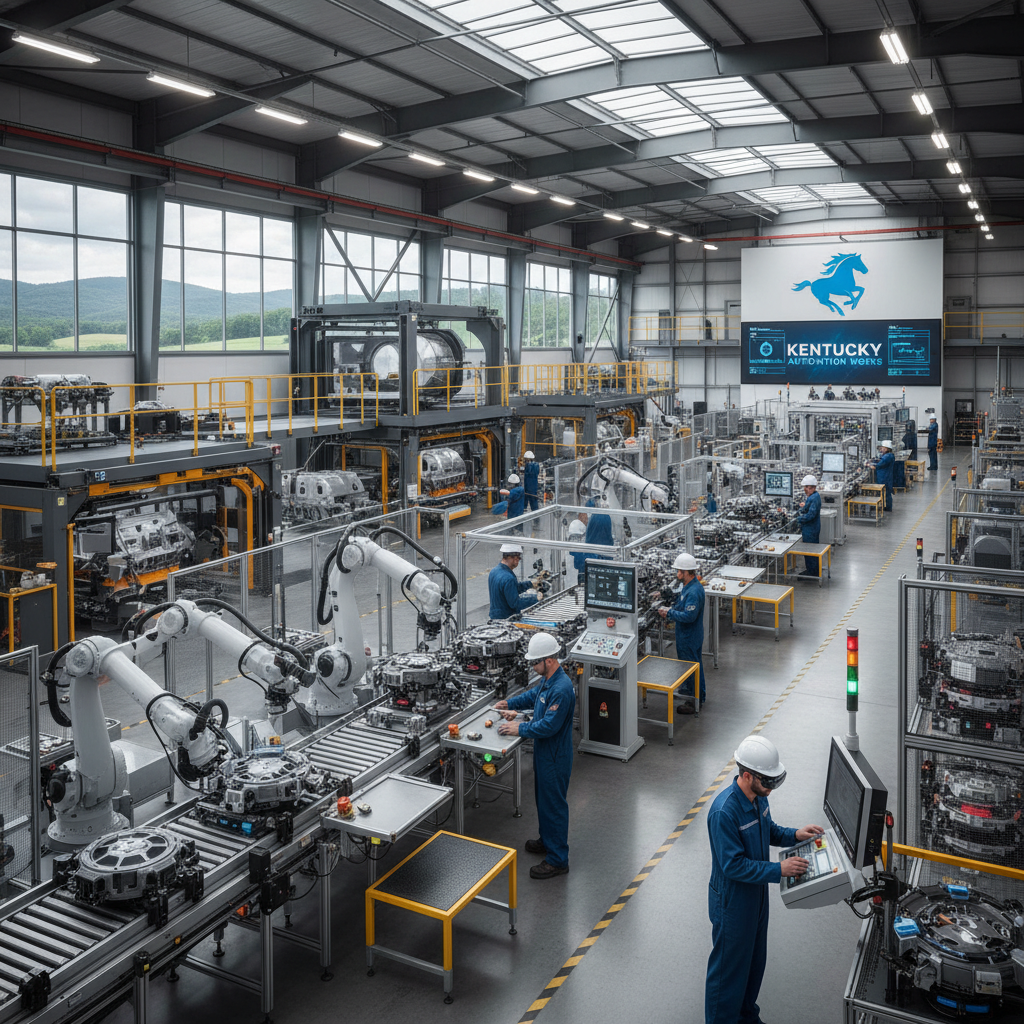
Kentucky’s strength in automotive production, aerospace parts, and appliance manufacturing is under strain. Plants in Louisville and Georgetown report delays in sourcing semiconductors, lithium-ion components, and electrical wiring.
But federal reshoring grants and workforce development funds are spurring a turnaround. GE Appliances in Louisville has announced a $600 million modernization effort to source more components domestically. Smaller auto suppliers across Lexington and Elizabethtown are investing in AI-powered inventory systems to manage overseas risk.
Agriculture: Diversification for a Volatile World
Farms across western Kentucky are seeing shrinking exports to China, especially for soybeans and corn. But in response, many are pivoting to niche crops like hemp, sorghum, and specialty livestock (bison, goats) aimed at regional and domestic markets.
Local co-ops are also expanding cold storage capacity and meat processing facilities with state-backed funding, allowing producers to keep more value-added profit within the state.
Energy and Logistics: Becoming a Crossroads State
With the Ohio River and extensive rail access, Kentucky is repositioning itself as a logistics bridge between southern and midwestern supply chains. Louisville’s UPS Worldport is expanding regional delivery services for U.S. suppliers no longer reliant on Asia.
Moreover, Kentucky’s proximity to natural gas pipelines and regional energy hubs is attracting biofuel and green hydrogen startups focused on reshoring clean energy components.
Key Investment Opportunities for 2025
- Reshoring Manufacturing ETFs
Investors are eyeing ETFs focused on advanced manufacturing and robotics, particularly those targeting mid-sized industrial hubs like Kentucky. - Agri-Tech Startups and REITs
Agri-tech companies helping with crop rotation planning, vertical farming, and regenerative land use are gaining attention from VCs and regional REITs. - Logistics Infrastructure and Rail Freight
Companies involved in inland port expansions, rail upgrades, and domestic cargo tech are thriving due to shifting trade routes. - Energy Innovation Funds
Green hydrogen pilot plants near Paducah and Bowling Green are attracting venture capital looking to capitalize on clean energy independence.
A Gritty Yet Grounded Outlook
Kentucky isn’t immune to global economic shocks—but it’s not standing still either. With its blue-collar backbone and growing tech-savvy outlook, the state is quietly rebuilding its economy to thrive in an uncertain global environment.
Whether it’s restructured manufacturing, smarter farming, or logistics modernization, Kentucky is making long-term bets on itself—and investors would be wise to pay attention.