- calendar_today August 10, 2025
The AI company OpenAI rolled out the innovative feature “Images in ChatGPT” to let users generate images through the ChatGPT platform interface. The GPT-4o model enables users to generate images during conversations, which represents a major advancement in AI-generated content creation.
The new image generation feature is accessible on all ChatGPT subscription levels, which include Plus, Pro, Team, and the free version, to expand access to more advanced image creation options. OpenAI spokesperson Taya Christianson told users that free tier limitations, which currently permit about three images daily like DALL-E 3, can be revised according to user demand. Users who enjoy DALL-E will still have access through a specialized custom GPT model.
OpenAI research lead Gabriel Goh defined GPT-4o as an “omnimodal” system which processes multiple data modalities like text as well as images and audio, and video. The model achieves a major upgrade through its improved “binding” functionality, which resolves a common obstacle in AI image generation. GPT-4o demonstrates accurate handling of 15 to 20 objects without falling into color or shape confusion, unlike earlier models, which frequently misinterpreted object-attribute relationships.
The system exhibits its greatest advancement through improved text rendering capabilities. AI-generated images traditionally display distorted or meaningless text elements. Goh described the development process as a lengthy iterative cycle spanning several months to achieve accuracy. The team successfully developed a consistent text rendering system, which makes text in images reliably usable, even though the perfect rendering of small text continues to present difficulties.
The system uses an autoregressive architecture instead of the diffusion models, which are typical among image generators. The sequential image generation approach from left to right and top to bottom, like text generation, likely enhances this system’s text rendering and binding abilities.
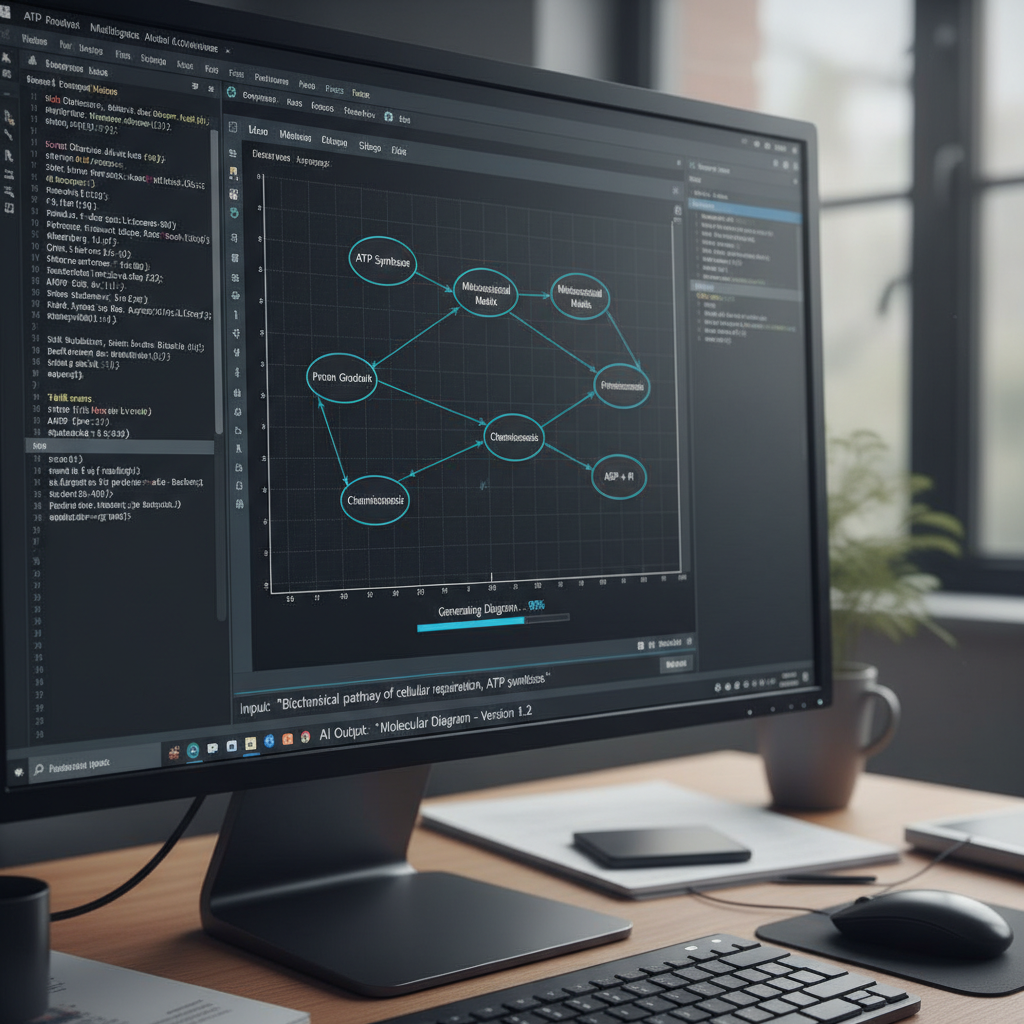
OpenAI demonstrated their system’s versatile capabilities during a briefing by producing scientific diagrams such as Newton’s prism experiment with precise labeling as well as multi-panel comics with consistent characters and dialogue, and informational posters with accurate text. The presentation included demonstrations of practical applications that generated transparent images for use in stickers and restaurant menus as well as logos.
ChatGPT’s multimodal product lead, Jackie Shannon, highlighted how the system utilizes its world knowledge capabilities. She explained that her artwork creation process is restricted by her personal abilities, yet enriched by everything she has learned from the world. The model integrates world knowledge into its operations, allowing you to request an image of Newton’s prism experiment without needing to provide further explanation to receive the image.
OpenAI maintains that the advancements in quality and functionality make the slightly longer image generation time worthwhile. Shannon acknowledged that there is potential to improve latency but affirmed that the superior image quality, combined with enhanced capabilities and world knowledge, compensates for the extra wait time.
Key Insights: Safeguards, User Ownership, and Technological Advancements
In response to worries about misuse possibilities, OpenAI emphasized its deployment of strong protective measures. This system prevents watermark removal while blocking the creation of sexual deepfakes and denies requests for CSAM content. OpenAI does not use visual watermarks but embeds C2PA metadata into every generated image to mark them as OpenAI products. Internal tools for image verification are maintained by the company.
Shannon admitted that while no system achieves perfection in this domain, they are dedicated to ongoing enhancement of their protective measures, which marks this as their initial step. All images created through ChatGPT belong to the user who can utilize them according to OpenAI’s established policies.
The combination of image generation capabilities with ChatGPT marks a major breakthrough in AI-enabled creative technologies. Through enhanced binding capabilities and superior text rendering combined with robust safeguards, OpenAI shows its dedication to developing a powerful tool that maintains responsible standards. By adopting an autoregressive approach instead of traditional diffusion models, OpenAI demonstrates its commitment to innovation in image generation technology. User ownership and metadata integration serve as crucial elements for maintaining transparency and ethical standards in the changing field of AI-generated content. The “Images in ChatGPT” feature represents OpenAI’s initiative to both improve their primary product and establish new benchmarks in AI-powered image creation that combines accessibility with strength.