
- calendar_today August 14, 2025
Kentucky’s real estate landscape in 2025 is marked by a pursuit of consistency. With interest rates stabilizing and inflation easing, investors are focusing less on speculative returns and more on assets that deliver long-term value. Across Louisville, Lexington, Bowling Green, and emerging smaller cities, developers and buyers are targeting markets aligned with population growth, affordability, and economic diversification.
What types of real estate are drawing investor interest in Kentucky this year? Seven sectors stand out, showing strength despite broader economic headwinds. These property types are adapting smartly to regional dynamics and offering promising returns.
Multifamily Housing: The Reliable Performer
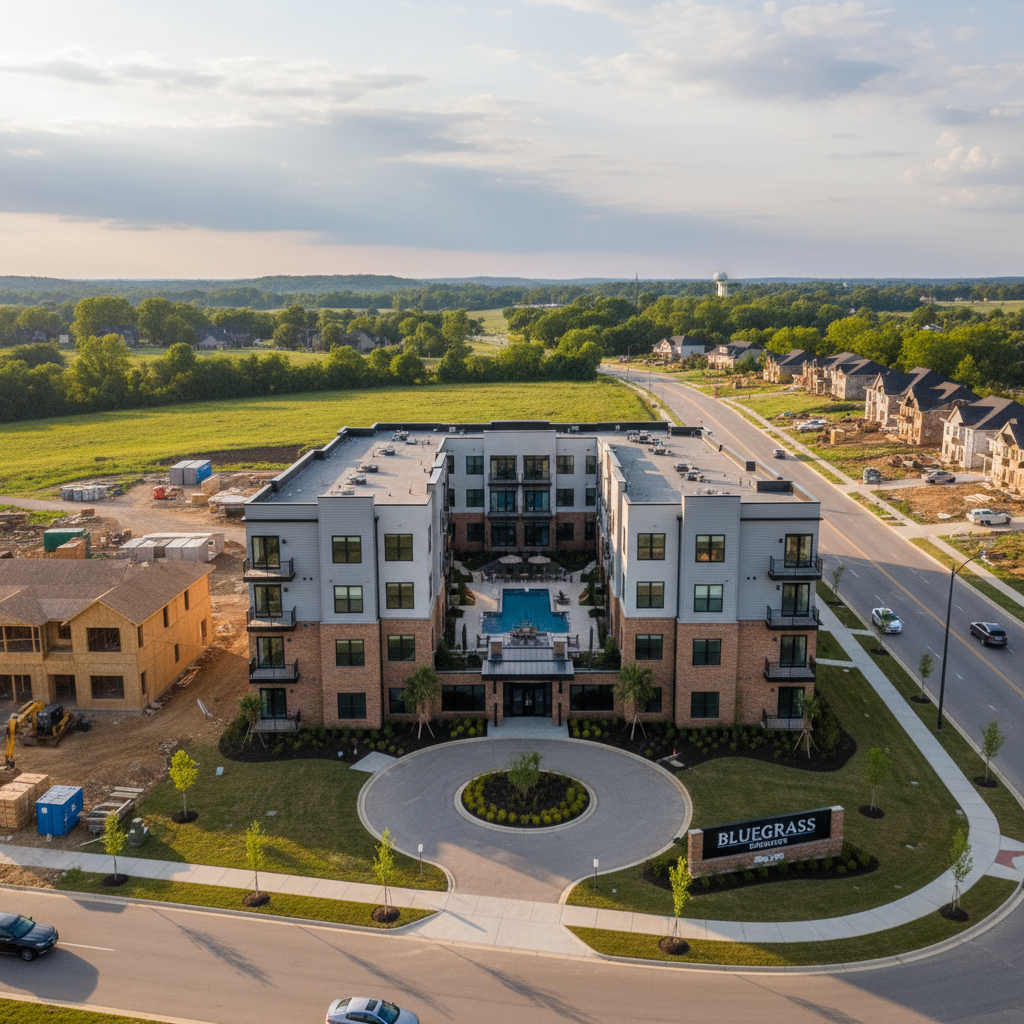
Multifamily housing continues to serve as a solid foundation for Kentucky real estate investors. In cities like Louisville and Lexington, demand for rental units remains high, especially in Class B and C properties. With homeownership still out of reach for many, renters are staying longer—keeping vacancy rates below 6% in several urban and suburban neighborhoods.
New construction is also gaining traction in mid-sized markets like Richmond and Elizabethtown, where build-to-rent models and mid-rise apartment complexes are becoming more common. With effective management and modest capital improvements, these assets can generate steady 3% annual rent growth—even in stabilized submarkets.
Industrial Properties: Still a Growth Engine
Kentucky’s central location and logistics infrastructure make industrial real estate one of the state’s strongest performing sectors. Anchored by UPS’s global hub in Louisville and supported by a growing manufacturing base, industrial properties from Northern Kentucky to the Bluegrass region are seeing robust demand.
JLL reports show sub-5% vacancy in key industrial corridors along I-65 and I-75, with rent growth averaging around 6.5% in 2025. Cold storage, distribution centers, and flex-industrial spaces are particularly attractive to institutional investors, as e-commerce, AI, and reshoring trends continue to reshape the supply chain.
Single-Family Rentals in Suburban Markets
The demand for single-family rentals (SFRs) is surging in Kentucky’s suburbs. In areas like Oldham County, Georgetown, and Bowling Green, working families are looking for space, flexibility, and affordability—without the burden of a mortgage.
Roofstock’s 2025 Investor Sentiment Index notes that SFR portfolios are expanding in Kentucky suburbs with access to strong schools and local employment. These properties typically see low turnover and reliable tenants, offering investors consistent income with relatively minimal maintenance. The proximity to job centers and the appeal of quieter communities make SFRs an increasingly popular asset.
Local Migration: Smaller Cities on the Rise
While Kentucky doesn’t experience the large interstate migration seen in Sun Belt states, it is benefiting from intrastate shifts. Residents are relocating from expensive urban cores to more affordable cities and towns like Somerset, Owensboro, and Paducah. Lower costs of living and growing regional employers are driving renewed interest in these secondary markets.
State and federal infrastructure funding is also bolstering interest in smaller Kentucky cities, particularly those along transportation corridors. Investors are targeting mixed-use developments, value-add multifamily, and small retail hubs in places where population is holding steady or growing slowly.
Mixed-Use Developments & Urban Revival
Mixed-use developments are helping rejuvenate Kentucky’s downtowns, especially in Louisville and Lexington. Historic areas like NuLu and the Distillery District are seeing new life through walkable neighborhoods that combine residential, retail, and coworking elements.
These projects can be challenging due to zoning and permitting, but the long-term payoff is increasingly evident. Young professionals and remote workers are choosing vibrant, amenity-rich districts over car-dependent suburbs. Smart developers are integrating coworking spaces, fitness centers, and ground-floor retail to create self-sustaining communities with lifestyle appeal.
Niche Assets on the Rise: Senior & Student Housing
Kentucky’s aging population is driving new interest in senior housing. Cities like Florence, Richmond, and Bowling Green are seeing increased development of independent living and assisted care facilities. According to NIC MAP Vision, senior housing occupancy in the region reached over 85% in early 2025, and is expected to continue climbing as the baby boomer population ages.
Meanwhile, student housing remains strong in college towns like Lexington (University of Kentucky), Morehead, and Murray. Developers are responding to demand for modern, tech-equipped student apartments with high-speed internet, shared social spaces, and easy access to campuses. Pre-leasing activity remains high, with occupancies averaging above 90%.
Risk Factors and Investment Cautions
While Kentucky presents many real estate opportunities, there are risks to consider. Flooding remains a concern in parts of eastern and western Kentucky, leading to higher insurance premiums and additional regulatory requirements for redevelopment.
In larger cities, property taxes and utility costs can eat into margins if not properly underwritten. Developers must also navigate evolving zoning laws and infrastructure challenges, especially when revitalizing older urban cores.
Though interest rates are beginning to plateau, borrowing remains more expensive than before 2022. Conservative underwriting, realistic rent projections, and local market insight are critical to maintaining healthy returns.
Expert Insight: What the Analysts Say
“Kentucky is seeing investment follow long-term economic anchors—logistics, education, and regional healthcare,” explains Lauren Bellingham, senior economist at CBRE. “Multifamily and industrial are leading the way, but suburban SFRs and smaller cities are creating some of the most interesting opportunities.”
Redfin’s 2025 Housing Trends report highlights Kentucky as a state where affordability and employment trends intersect. The report emphasizes the importance of aligning property strategies with migration flows and infrastructure investments across the state.
Strategic Diversification is Key in 2025
Investors in Kentucky who take a broad, diversified approach are better positioned to succeed in 2025. Multifamily properties in Louisville and Lexington provide stable cash flow, while industrial assets continue to benefit from Kentucky’s logistics advantages. SFRs are seeing strong tenant demand in growing suburbs, and smaller cities are ripe for mixed-use and value-add plays.
Niche housing—particularly for students and seniors—is quietly gaining momentum, backed by demographic certainty. As certain regions accelerate and others stagnate, local knowledge and asset diversity are essential to outperforming the market.
In a real estate environment where precision matters more than speculation, Kentucky offers a range of promising opportunities for those ready to invest with foresight and flexibility.