
- calendar_today August 8, 2025
.
In another bid to tout his foreign policy record, President Donald Trump said Monday that he has already ended six wars in his second term. He also raised the prospect of resolving the war in Ukraine during a meeting at the White House with Ukrainian President Volodymyr Zelensky and European leaders.
“I’ve done six wars — I’ve ended six wars,” Trump told reporters at the White House, referencing various U.S. military operations and initiatives across the Middle East, Africa, and Asia. “Look, India-Pakistan, we’re talking about big places. You just take a look at some of these wars. You go to Africa and take a look at them.”
The White House later released a statement touting Trump as the “President of Peace,” referring to agreements or initiatives with Armenia and Azerbaijan, Cambodia and Thailand, Israel and Iran, Rwanda and the Democratic Republic of the Congo, Egypt and Ethiopia, and Serbia and Kosovo. It also referred to the Abraham Accords that Trump signed during his first term, normalizing relations between Israel and several Arab states.
Deal Breaker
Analysts caution, however, that in most cases, the agreements are fragile ceasefires or outright broken promises. In the case of Israel and Iran, Trump told reporters that he brokered peace after a 12-day war, but Iranian officials remain deadlocked with the West over Tehran’s nuclear program, and the two countries have been hostile toward each other for decades.
Some of Trump’s recent claims have already proven false. His efforts to end fighting between Israel and the Hamas terror group in Gaza failed, and outreach to North Korea during Trump’s first term was ultimately futile, leaving dictator Kim Jong Un with more nuclear weapons than he started with.
The most recent example of Trump’s diplomatic efforts was a declaration of intent signed earlier this month at the White House between Armenia and Azerbaijan. The deal includes mutual recognition of borders and renunciation of violence, as well as the opening of a U.S.-controlled transport corridor that Trump has branded the “Trump Route for Peace and Prosperity.” Azerbaijan’s President Ilham Aliyev called it “a miracle,” but experts say that many core issues between the two countries remain to be addressed.
On another front, Trump pointed to his role in Southeast Asia, where he reportedly used the threat of trade penalties to encourage two nations to halt a border conflict that left 38 dead. Cambodia and Thailand had planned a landmine attack and ambush along their border, but the ASEAN regional bloc also played a significant role. Cambodian Prime Minister Hun Manet, the son of former dictator Hun Sen, nevertheless went out of his way to credit Trump — even nominating him for the Nobel Peace Prize.
In South Asia, the president claimed credit for a border flare-up between nuclear-armed India and Pakistan in May. While Islamabad publicly thanked the United States for getting involved, New Delhi shut down the administration’s efforts. The cease-fire deal left the question of the disputed Kashmir region up for grabs, with many doubting it will last long.
He also claimed credit for peace in Africa, specifically a border dispute between Rwanda and the Democratic Republic of the Congo that erupted into violence and saw militias clash. The two countries agreed to disarm the militias and tamp down tensions, but the M23 rebel group, which has been fighting in the region, rejected the deal. Experts believe the U.S. is also pushing both sides in part because of China’s strong presence there vying for control of valuable minerals.
Trump has also been claiming credit for progress on a longstanding dispute between Egypt and Ethiopia over a Nile river dam project, but no binding agreement has been reached. The White House also put his name on earlier initiatives between Serbia and Kosovo that have laid the groundwork for economic normalization, but they do not have formal diplomatic relations, and the EU has led those talks in recent years.
Analysts have also noted that Trump has weakened the State Department and cut U.S. Agency for International Development resources, hindering his ability to achieve long-term peace agreements.
However, some say that Trump’s more unorthodox style — including bold threats and applying his own brand to treaties — can also sometimes be more effective in producing short-term results.
One of the few examples cited by Trump critics and supporters alike was his quiet diplomacy between India and Pakistan, which was effective, according to Celeste Wallander, a former assistant secretary of defense who is now with the Center for a New American Security. “The ones that were helpful were conducted in a professional way, quietly, diplomatically … finding common ground between the parties,” she said.
Trump Makes Bid to End War in Ukraine
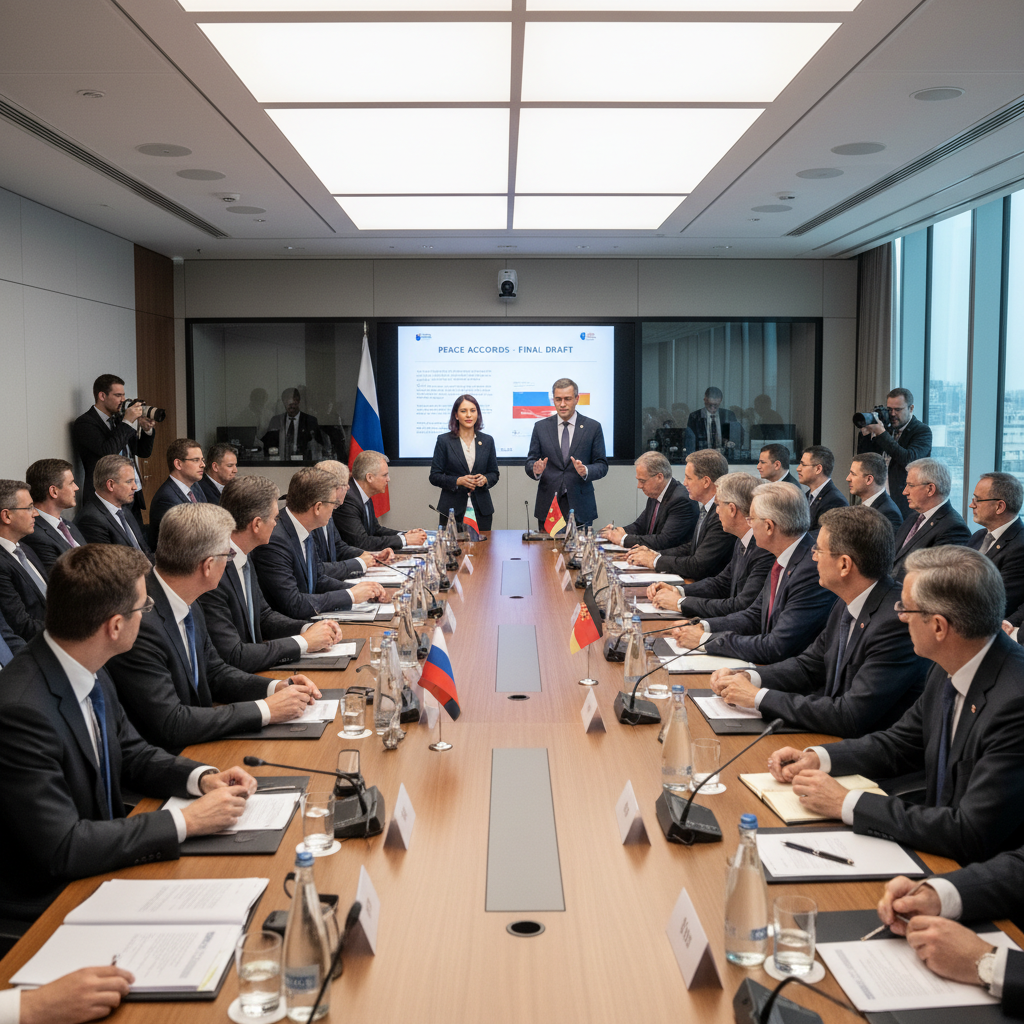
In another claim, Trump also said that he could end the war in Ukraine. He met at the White House with Zelensky, who requested a meeting to discuss efforts to end the nearly eight-month war. Ukrainian officials have also traveled to Brussels to make a pitch to European leaders. While Trump appeared to support Zelensky’s request, it was not immediately clear if European leaders were onboard, and there was no indication when such a meeting might take place.
There has not been an active U.S. peace process with Russia or Ukraine that Trump could realistically enter, but former Trump officials have raised concerns about the president potentially making a secret deal. Russian officials are reportedly open to a summit between Putin and Trump, and they have signaled interest in offering a truce to Ukraine in exchange for Kyiv giving up any aspiration to join NATO or the EU.
Trump’s most direct efforts so far have been aimed at Turkey, a NATO ally. Trump has called Turkish President Recep Tayyip Erdogan and has held private meetings with him, trying to use Erdogan’s close ties with Putin to influence the war. Turkish leaders have so far expressed strong support for a U.S.-brokered peace deal.