
- calendar_today August 9, 2025
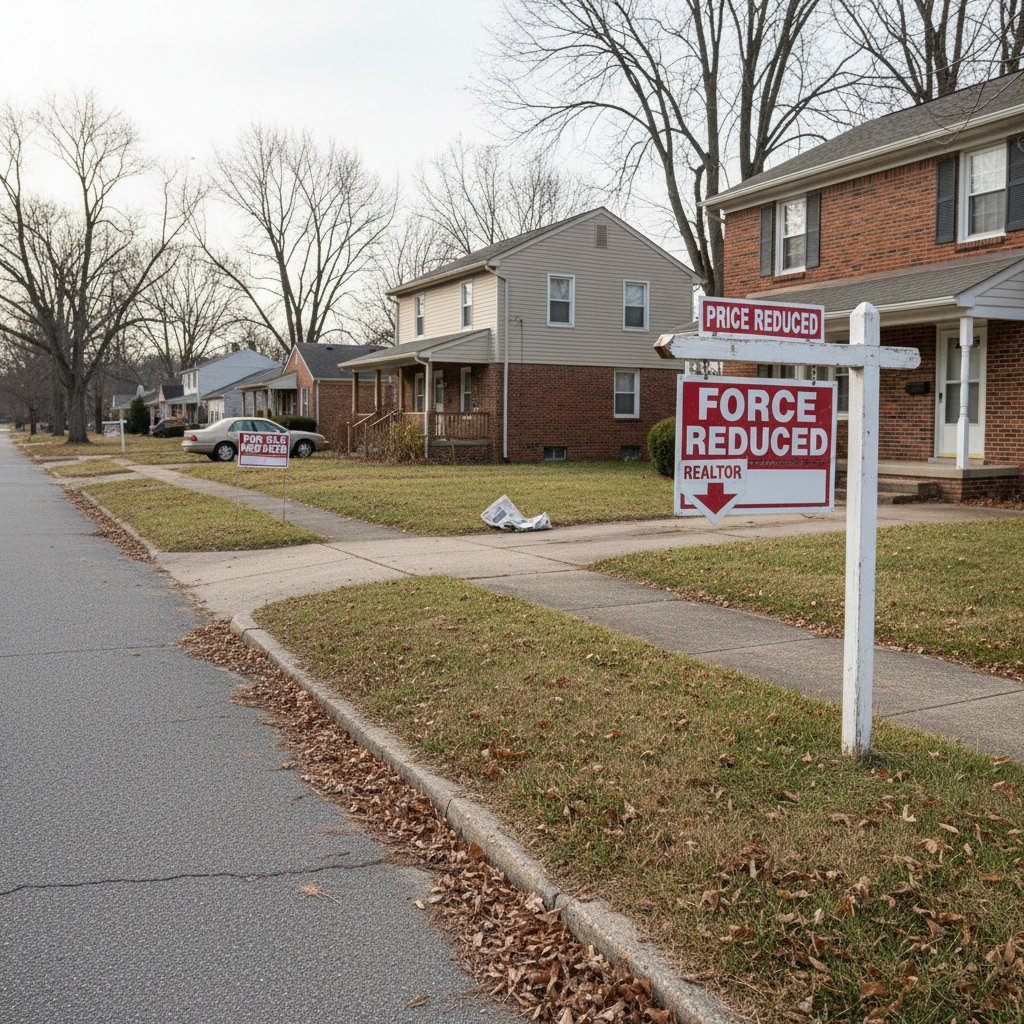
In 2025, Kentucky’s housing market has shifted from its previous trajectory of gradual growth to a near-standstill. While the state never experienced the extreme booms or busts seen in places like California or Florida, Kentucky’s real estate market had been steadily gaining steam over the last decade—until this year. Buyers are pulling back, sellers are hesitant, and the state’s real estate professionals are navigating one of the most sluggish markets in recent memory.
Interest Rates Freeze Activity
The primary factor behind Kentucky’s housing slowdown is the ongoing rise in mortgage rates. As of mid-2025, average 30-year fixed mortgage rates are hovering between 6.7% and 7.2%, up from the sub-4% levels seen just a few years ago. For Kentucky homebuyers—many of whom are first-time purchasers—the higher cost of borrowing is enough to put plans on hold.
“In Louisville and Lexington, we’re seeing serious hesitation among entry-level buyers,” said Amanda Long, a real estate agent in Lexington. “Even with decent inventory, buyers are reluctant to lock in at these rates. Monthly payments just don’t make sense for their income levels.”
According to Zillow, the monthly mortgage payment on a median-priced home in Kentucky is now 35% higher than in 2022. This affordability strain is most evident in metro areas, but it’s also affecting rural communities, where incomes are lower and lending options are limited.
Inventory Tightens Despite Reduced Demand
Paradoxically, inventory in Kentucky has remained tight, even as buyer interest has dropped. Many homeowners who refinanced at ultra-low rates in 2020–2021 are simply staying put, unwilling to trade a 3% mortgage for one that’s double the cost. This “lock-in effect” is contributing to a stagnant market where few homes are listed and even fewer are sold.
In Northern Kentucky, agents report that homes are sitting longer on the market than they did last year, but not because of overpricing—simply because there aren’t enough qualified buyers.
“There’s a stalemate,” said Jerry Monroe, a broker based in Covington. “Sellers aren’t reducing prices, but buyers aren’t willing to bite either. Everyone’s waiting for something to give—either a rate drop or a market correction.”
Price Corrections Begin—Slowly
Home values across Kentucky have begun to soften, though not dramatically. In cities like Bowling Green, prices are down about 4% year-over-year. In Louisville, the decline is closer to 6%. However, the corrections are uneven, with some neighborhoods still holding firm.
In the eastern part of the state, particularly in counties like Pike and Floyd, price drops are more pronounced due to job losses in energy and manufacturing. These economic headwinds are contributing to slower real estate movement and more price flexibility among distressed sellers.
Statewide, analysts expect home prices to fall another 2–4% by the end of 2025 if interest rates remain high.
New Construction Slows to a Crawl
Builders in Kentucky have dramatically reduced activity in response to market uncertainty. Permits for new single-family homes dropped 18% in the first half of 2025 compared to the same period in 2024, according to the U.S. Census Bureau.
“Construction costs are still high, and the pool of qualified buyers is shrinking,” said Michelle Carter, a homebuilder in Frankfort. “It’s too risky to break ground right now unless a project is pre-sold.”
Some developers have pivoted to multifamily units or rentals, especially in college towns like Bowling Green and Richmond, where rental demand remains strong. However, this shift hasn’t been enough to offset the broader construction slowdown.
Regional Disparities Across the State
Kentucky’s market freeze is not uniform. Urban areas like Lexington and Louisville are seeing slower transaction volumes but less severe price declines. These cities still benefit from stable employment sectors like healthcare, education, and logistics.
In contrast, many rural regions—especially in Appalachia and parts of western Kentucky—are experiencing sharper downturns. Population stagnation and economic contraction in these areas have magnified the impact of the housing freeze.
“The difference between Paducah and Lexington right now is night and day,” said Long. “In Lexington, we still have competitive offers, though fewer of them. In rural areas, houses are just sitting with no traffic.”
The Role of Inflation and Consumer Sentiment
The broader economic backdrop is also playing a role. Inflation, though cooling, remains elevated in essentials like food and utilities. For many Kentuckians, real estate has taken a backseat to day-to-day budgeting.
Additionally, consumer confidence has dipped, particularly among younger buyers who are wary of overextending themselves. A recent survey by the Kentucky Association of Realtors found that 61% of potential buyers under 40 are postponing their home search indefinitely.
“People are feeling cautious,” said Monroe. “No one wants to buy at the top of the market or get stuck with high payments and little equity.”
Rental Market Holding Strong—For Now
With fewer people buying homes, rental demand has surged. In cities like Bowling Green and Owensboro, vacancy rates are low, and rents have increased by 7% year-over-year.
However, landlords are also facing headwinds, including rising property taxes and maintenance costs. The profitability of rental properties may decline if these trends continue, which could eventually cool the rental market as well.
What to Expect for the Remainder of 2025
While the Federal Reserve has hinted at potential rate cuts in late 2025, any relief is likely to be gradual. Most real estate experts in Kentucky agree that the market will remain sluggish through the end of the year.
“We’re not looking at a crash, but we are definitely in a freeze,” said Carter. “It’s going to take lower rates and more economic clarity to thaw things out.”
For buyers, that means more negotiating power—but also more uncertainty. For sellers, patience is essential, especially outside major metro areas. And for investors, Kentucky’s housing market remains a wait-and-see proposition.
Kentucky’s housing market freeze in 2025 is a product of high borrowing costs, low inventory, and economic caution. While it hasn’t been hit as hard as coastal states, the Bluegrass State is feeling the chill in its own way. As the year progresses, all eyes are on interest rates and inflation for clues on when—and how—the market might finally thaw.